Quick answer
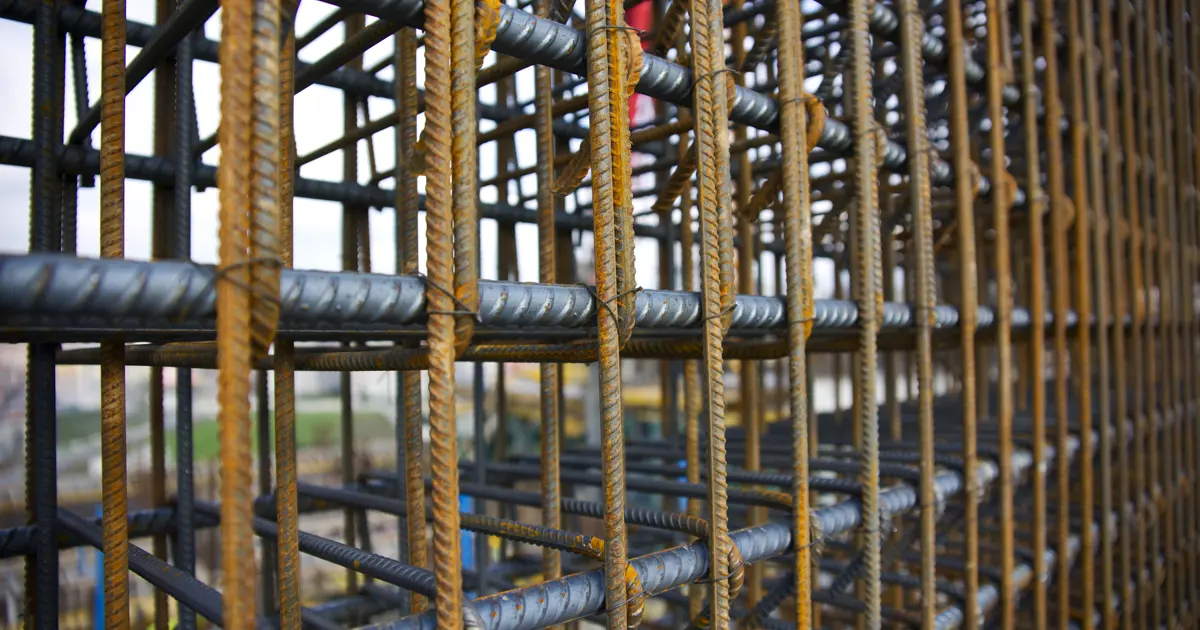
Deformed bars (rebar) are steel reinforcing bars with raised ribs that grip concrete. They are named by diameter: Y10 is a 10 mm high-yield deformed bar, Y12 is 12 mm, and so on. Smaller sizes such as Y8 to Y12 are common in slabs, lintels and light structures; larger sizes such as Y16 to Y25 are used in columns, beams and heavier foundations. The size and spacing must come from your engineer, builder or approved plans. Order using a bill of quantities if you have one.
What are deformed bars?
Concrete is strong when squeezed but weak when pulled or bent. Steel bars cast inside the concrete carry those pulling forces. Deformed bars have raised ribs along their length so the concrete grips them and the two materials work together. Plain round bars (often marked R, for example R8) have a smooth surface and are mostly used for links and stirrups.
Reading bar sizes
In Zimbabwe, bars are usually described by a letter and a number:
- Y means a high-yield deformed bar, and the number is the diameter in millimetres. Y12 is a 12 mm deformed bar.
- R means a plain round mild steel bar. R8 is an 8 mm round bar.
The table shows the standard mass per metre for each size, which is how steel is often weighed and priced. It is calculated from the diameter, so it is the same for any supplier.
| Bar | Diameter | Mass per metre | Typical uses (follow your engineer) |
|---|---|---|---|
| Y8 | 8 mm | 0.395 kg | Light mesh, small lintels, links |
| Y10 | 10 mm | 0.617 kg | Slabs, lintels, ring beams, boundary walls |
| Y12 | 12 mm | 0.888 kg | Slabs, beams, footings, columns in light structures |
| Y16 | 16 mm | 1.578 kg | Columns, beams, heavier footings |
| Y20 | 20 mm | 2.466 kg | Heavily loaded columns and beams |
| Y25 | 25 mm | 3.853 kg | Large structural members |
Quick weight check: mass per metre (kg) = diameter in mm × diameter ÷ 162. So a Y16 bar weighs about 16 × 16 ÷ 162 = 1.58 kg per metre.
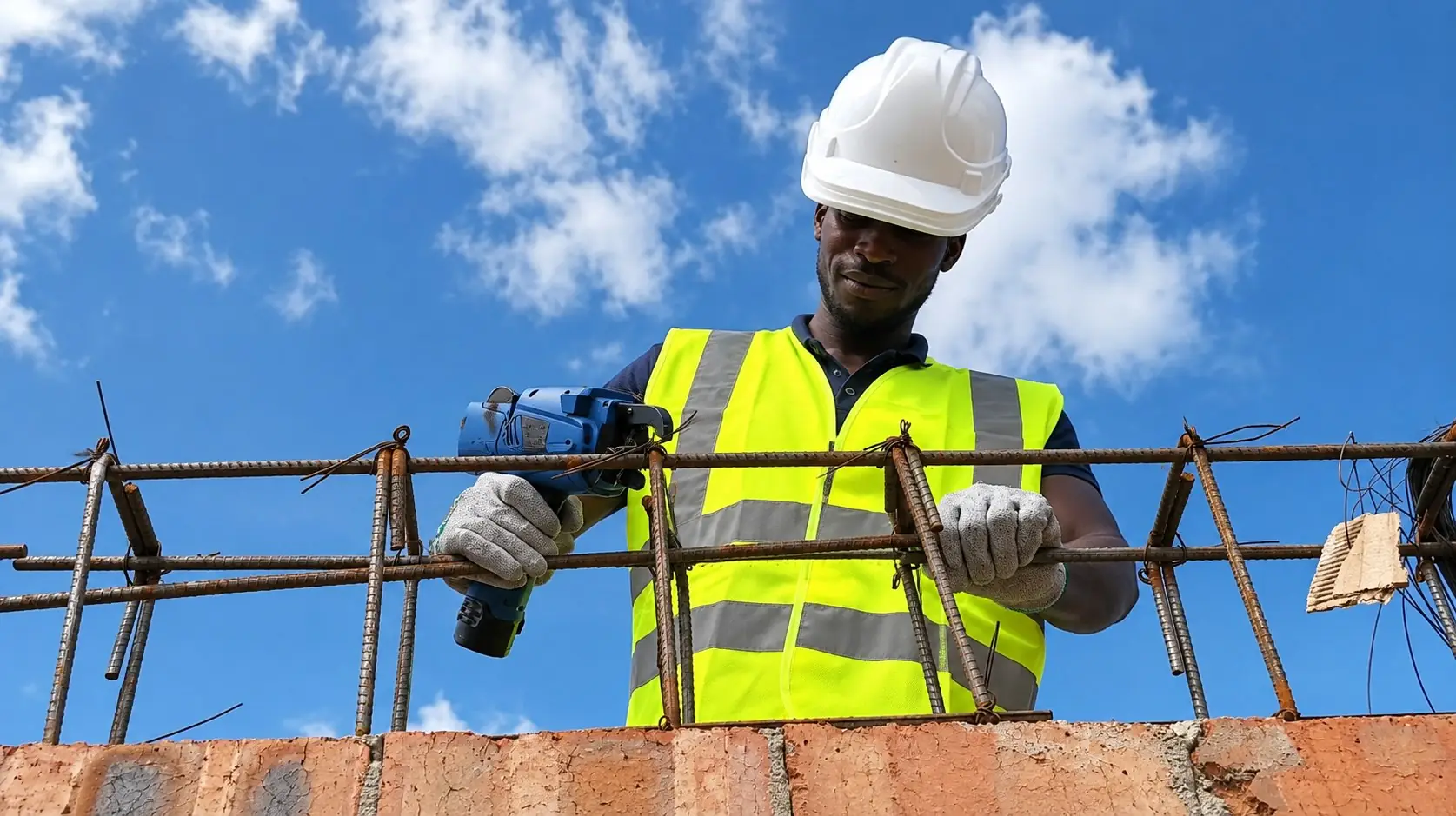
Deformed bars or reinforcing mesh?
| Deformed bars | Reinforcing mesh | |
|---|---|---|
| What it is | Individual bars, cut and tied on site | A ready-welded grid in sheets |
| Best for | Columns, beams, footings, complex shapes | Floor slabs, driveways, yards, some walls |
| Speed | Slower: every bar is placed and tied | Faster to lay over large flat areas |
| Flexibility | Any layout the engineer specifies | Fixed grid sizes |
Many projects use both: mesh in the slab and deformed bars in the foundations, columns and beams.
Where steel goes in a typical build
- Foundations and footings: bars in strip and pad footings carry the building's load into the ground.
- Floor slabs: mesh or bars help control cracking and carry loads.
- Columns and beams: main bars run along the length, tied with links.
- Lintels and ring beams: carry loads over openings and tie walls together.
- Boundary walls and gate pillars: reinforcement stops cracking and toppling, especially on tall walls or walls carrying a gate or fence.
How to order the right amount
- Use your bill of quantities or drawings. They list each bar size, number and length.
- Allow for laps and waste. Bars overlap where they join, and offcuts are unavoidable.
- Order by project stage (foundations first, then slab, then columns and beams) if storage on site is limited.
- Store steel off the ground and covered, so it stays clean and free of heavy rust.
- Plan delivery access for a truck carrying long bars.
Always follow your engineer's or builder's specification for bar sizes, spacing and cover. Using smaller or fewer bars to save money can make a structure unsafe.
Ordering steel from Azzar
Azzar supplies deformed bars, reinforcing mesh and construction mesh to builders, contractors and home owners from its yard in Graniteside, Harare. Send the product type, bar sizes, quantities, project location and preferred delivery date, or simply send your bill of quantities, and we will quote the matching steel. Collection from the yard can also be arranged. See deformed bars and steel.
Get a quote from Azzar
Send us your location, the approximate length, what you want to protect and a few photos. We reply with a recommendation and a no-obligation quote, and arrange a free site assessment if one is needed.